

Companies that haven’t invested in business profitability and productivity tools like an ERP platform or a CRM will likely have no idea of the differences between these two powerhouse types of software. To start understanding ERP vs. CRM, we must first define the acronyms:
The types of ERP systems on the market today can be confusing. This post will help you pick the right one for your business.
Topics: ERP

One of the coolest features of SharePoint is that it automates workflows. SharePoint workflows are minute-applications within the tool to save you labor costs by improving workflows. This is a tool that can bring some standardization to any corporate workflow that seems too “random.”
Topics: Sharepoint, SharePoint Workflows

How many hours each week are your employees wasting on repetitive tasks? Are you confident that your organization is as efficient as it should be? Have you given thought to how your existing software tools could help your business improve?
A recent workplace automation survey suggests that your employees are wasting around 40% of their time on repetitious tasks. What you may not realize is that if you’re using SharePoint, you have a tool at your fingertips to turn things around.
This article will show you how to use Microsoft SharePoint workflows to maximize productivity in the workplace. Let’s take a look.
Topics: Microsoft Sharepoint, SharePoint Workflows

One of the biggest technology mistakes with small business is when they pick their software “in the now.” What we mean is that they look for software to handle HR, payroll, billing, sales, or other operational functions based upon criteria tied to what they need today. In this, there is a failure to see the vision of scalability that could, and should, come with business growth.
The result is that they end up with a piecemeal of legacy platforms. The effect on the ground is that this patchwork of technology creates more work for staff, and many times the software isn’t able to flex with business growth.
Topics: ERP, Small Business

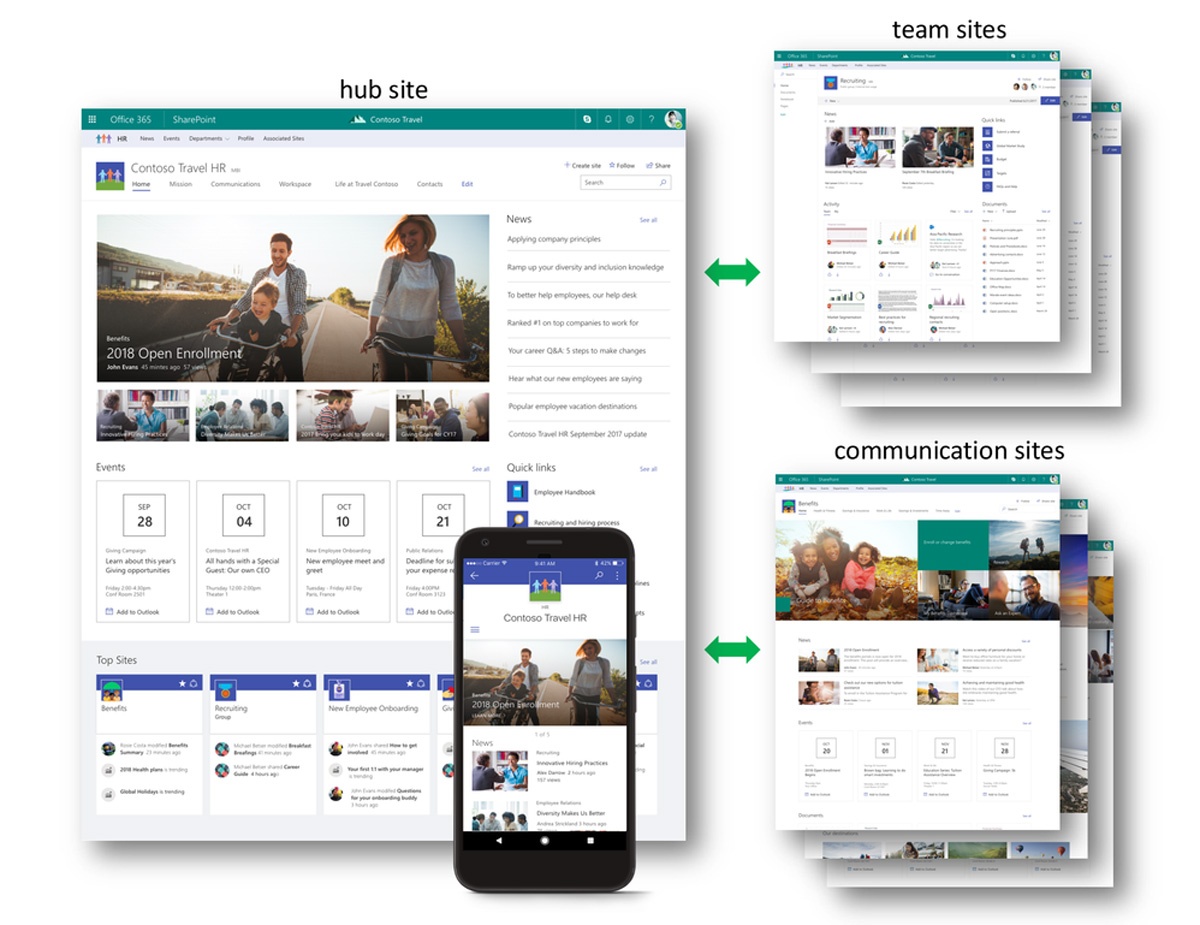
To understand the purpose of a SharePoint hub site you have to think about a wagon wheel. Within the context of a department, region, division, or product, the hub is the one piece holding the myriad of components together. What connects the spokes in a wagon wheel? The hub, of course, and Microsoft SharePoint hub sites are the one organized focal point for the teams that use the software.
Topics: Microsoft Sharepoint
Today, software iterations evolve faster than global weather patterns. These changes stem from a heady mix of marketplace competition, product innovation, and the tennis volley between software developers and cyber criminals.
Microsoft, in particular, has embraced the drive to innovate, with a twice-a-year release cycle for the past decade or so. Today, it seems like Microsoft is releasing new versions of its software offerings almost constantly, which can throw your help desk, your IT team, and your staff into a tailspin.
Topics: Dynamics 365

We already understand the importance of sharing information between departments. That’s exactly why companies like Microsoft have developed a whole set of office tools under the Dynamics 365 umbrella. The interoperability of all these platforms is an intelligent way to streamline operations and sales by sharing data back and forth.
Topics: ERP, CRM Integration

So, here’s a dilemma: Not all software systems are configured properly to play nice with others. Fortunately, in the case of Dynamics 365 and SharePoint, since both are Microsoft products, they naturally integrate well with each other. Microsoft has worked hard to create an umbrella of office software suitable for the largest enterprise organizations or the solo entrepreneur.
However, Dynamics 365 SharePoint integration is necessary to optimize the ROI on these products. This article will help you understand why Dynamics 365 SharePoint integration not only matters – but why it’s imperative for your business.
Topics: Sharepoint, Dynamics 365
Nucleus Research says for every $1 spent on a customer resource management (CRM) software platform, the return is between $5.60 and $8.71. Now here’s the bad news; HubSpot says 40% of sales reps don’t even use this tool to manage leads, instead relying on Excel spreadsheets or perhaps Rolodex cards to control their sales funnel and foster customer relationships. How is this even possible when the statistics tell us that 47% of the teams that use a CRM say these platforms have a positive impact on customer retention?
Topics: Microsoft Dynamics CRM